

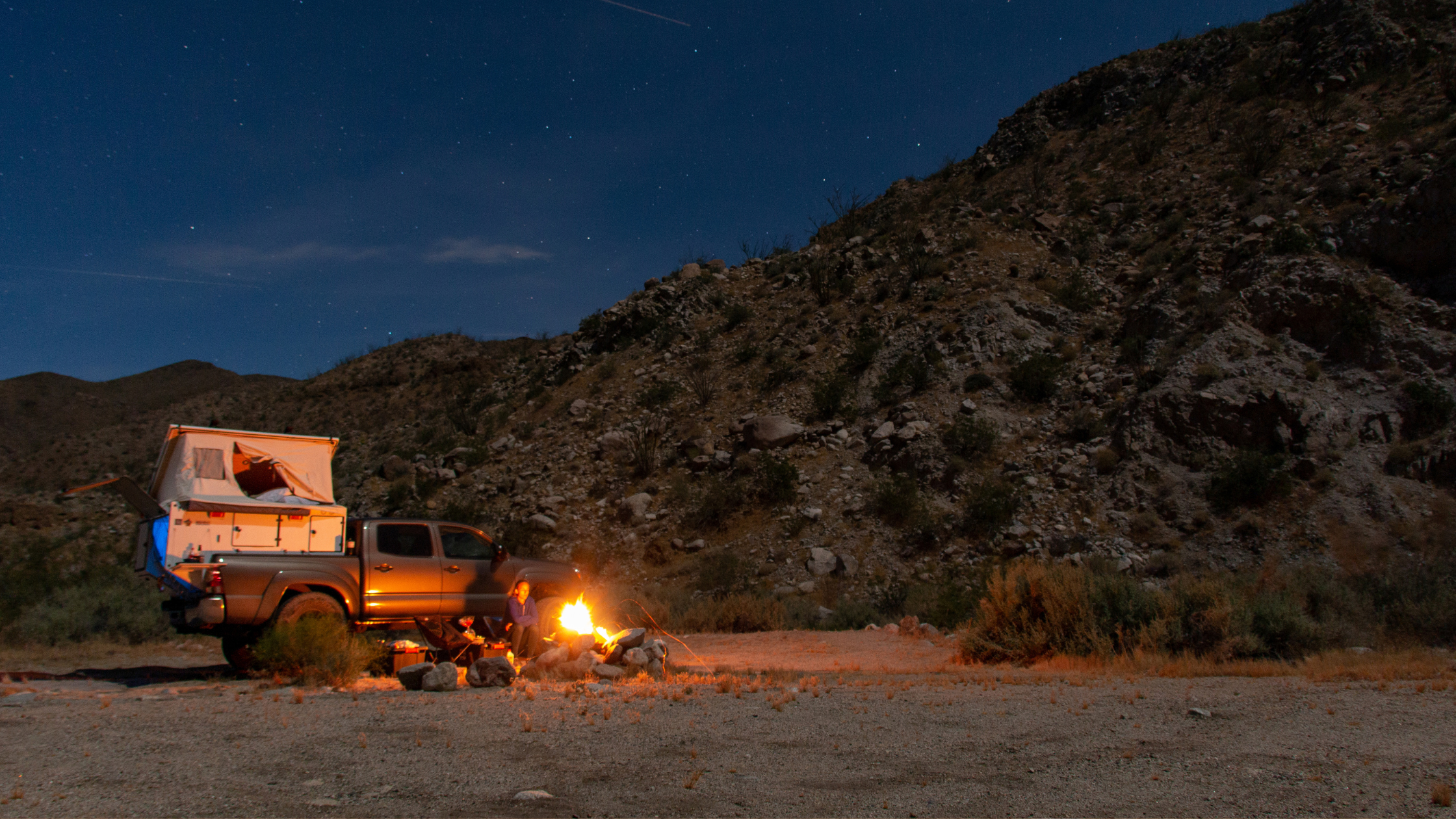
Deep in the backcountry, being unprepared isn't an option. Here's what overlanders say you really need.

In This Article
-
Why preparedness matters in remote situations
-
The survival gear overlanders need
-
How much food and water should you carry when overlanding?
-
Staying reachable when cell signal disappears
-
Recovery gear for when you're stuck
-
Emergencies you should plan for
-
How to build your kit
-
Planning your trip so help can find you
-
The full gear checklist
-
FAQs
Overlanding offers unmatched freedom, but it also requires serious preparation. One mechanical failure or wrong turn can leave you stranded, and help might not be close. That's why packing proper overlanding emergency supplies is your first line of defense when your travel plans go south.
From comms gear (including TravlFi) to fire starters, we spoke with overlanding experts and survivalists about the gear they always pack. One of these experts is Jeremy Gocke, CEO of Entropy Survival, who calls hydration, injury response, rescue communication, vehicle extraction, and exposure protection "mission-critical, regardless of season or terrain." Whether you're just starting out or planning a remote expedition, we’re here to help make sure you're never caught unprepared.
TL;DR
Overlanding takes you far out of cell range, so your overlanding emergency supplies need to cover shelter, food, water, first aid, navigation, recovery, and communication. Experts recommend three days' worth of food and water, multiple forms of communication, like a satellite messenger paired with a multicarrier hotspot, trauma-equipped first aid, and vehicle recovery gear. Adjust for terrain and season, and test everything before you actually need it.
Experts Who Contributed to This Guide
-
This article was written by Amanda Capritto, TravlSync editor and full-time vanlifer.
-
This article was updated by Lauren Keary, experienced travel journalist.
-
Colt Fetters, overlander based in Durango, CO, contributed expertise to this article.
-
Jeremy Gocke, CEO of Entropy Survival, contributed expertise to this article.

Why Emergency Preparedness Matters for Overlanding
Building out your emergency kit starts with covering the basics. Every RVer needs an emergency kit, of course, but an overlanding emergency kit differs from a hiking emergency kit or a basic first aid kit.
When overlanding, you'll realistically be far off the beaten path, maybe hours from the nearest person or even the nearest paved road. That means you'll need more gear than someone road-tripping to campgrounds along major highways.
Jeremy Gocke recommends a three-day water supply, a trauma-equipped medical kit, reliable off-grid communication tools, vehicle recovery gear, fire-starting equipment, and emergency shelter as non-negotiables.
"These are mission-critical for hydration, injury response, rescue communication, vehicle extraction, and surviving exposure, regardless of season or terrain," he says.
Self-sufficiency matters when overlanding because cell service drops out, towns fade, weather flips without warning, and a slow leak can leave you stranded. The further you drive from infrastructure, the more your overlanding survival gear has to support you.
Essential Survival Supplies for Overlanding
You want to assume you might be completely on your own for days (or weeks in an emergency situation) when you’re overlanding, meaning anything you could possibly need in that amount of time, you need to have on hand.
Shelter and Warmth Equipment
In a worst-case scenario (i.e., a broken-down rig, snowstorm, unexpected overnight in the wild, etc.), the right shelter and warming gear is going to be what keeps you alive until help arrives or you can dig yourself out. A tarp or poncho will keep you dry in a rainstorm, and an emergency blanket can help keep your temperature regulated if you're stuck without your rig.
Carry a wool blanket or shemagh, which is a versatile piece of cloth used for warmth, shelter, filtering water, or signaling. Add in an extra set of dry clothes (underwear, socks, gloves, and a thermal base layer), plus a few hand warmers for cold-weather trips.
Fire-Starting Tools and Lighting
Fire is absolutely key for cooking, staying warm, signaling, and morale, and you don't want to be fumbling with a soggy little lighter at 2 a.m. Pack waterproof matches, a couple of lighters in case one fails, magnesium rods with strikers, and tinder or kindling for when you’re short on nature’s resources.
Headlamps are ideal for hands-free work, plus a flashlight or lantern when you’re at camp. Always bring more batteries than you think you’ll need since cold drains them fast, and a dead headlamp in the backcountry is likely to bring out everyone’s fear of the dark.
Protective Clothing and Weather Gear
The desert sun and mountain wind can be just as dangerous as a snowstorm. A wide-brim hat, sunglasses, sunscreen, and a balaclava or ski mask can shield you from the elements. You need to layer up when it’s cold out, so pack what you'd need for the worst conditions possible. Forecasts get less reliable the further you push from cell range, so plan for a tier worse than what even your most reliable weather app is telling you.
Multi-Purpose Tools and Repair Gear
A solid multitool covers everything from cutting cordage to tightening loose hardware. Keep electrical tape and duct tape on hand for on-the-fly repairs (like torn tarps or a cracked water bottle).
A clean towel or rag, a metal cup that can be used for boiling and drinking, a spork, and a roll of zip ties all serve practical and multiple purposes. If you're cooking, a compact backpacking stove like the Snow Peak GigaPower with a fuel canister is a great backup for if your main kitchen breaks down.
Food and Water Planning for Emergencies
The general rule of thumb in overlanding is the 72-hour standard. Pack your rig with enough food and water to last a minimum of three days for every person on board, plus extra if you're going to be in super hot or very remote climates and locations. That covers your average breakdown-to-rescue window if anything goes wrong, plus a little cushion time.
For water, you'll want both stored water and a way to purify what you find in your environment. Mechanical or gravity filters get rid of most pathogens, while germicidal tablets are a lightweight backup for emergencies. Add in some electrolytes too since sweating it out in the desert without electrolytes is not something any of us want to experience.
Focus on calorie-dense food options and shelf stability. Peanut butter, freeze-dried meals, dried fruit, and jerky are calorie-heavy, and don’t take up much space or go bad in the heat.
If you’ve got animals on-board, pack a 72-hour supply of food per pet, plus a collapsible bowl. Dogs can really lose hydration fast when they're pumped up (as they often are with new experiences), so include extra water for them when you’re doing your hydration math.

Communication Tools for Remote Travel Emergencies
When cell service disappears (yes, when), you need overlanding communication devices that don't rely on the same infrastructure your phone does. Pair a couple of comms tools so a single one doesn't leave you hanging in a crisis.
Satellite communicators, like the Garmin inReach, Zoleo, SPOT, or ACR Bivy Stick, let you send two-way SOS messages, share your location, message family, and trigger emergency response anywhere with a clear sky view. They're the closest thing you’ll find to a guaranteed lifeline in the backcountry, so we consider them non-negotiable. Toss in offline GPS navigation (Gaia GPS, onX Offroad, Avenza, and CalTopo let you download maps before you lose signal), which can help you know where to go even when your phone is SOSing. Bring a paper topo map and a compass too for the worst-case scenario when your batteries tap out too soon.
For the spots where cell and satellite signals don’t exist (like deep canyons or forest), HAM radios and two-way radios clock in. A multiband two-way HAM radio takes some setup and licensing, but the payoff is reliable communication when truly nothing else works.
For day-to-day stuff, like weather forecasts, navigation app updates, route adjustments, and check-ins with the people who'd worry if you didn't return on schedule, mobile internet is imperative. A multicarrier hotspot like the TravlFi JourneyGo automatically connects to the strongest available network in your area, which gives you a much better shot at signal than your phone alone. For overlanders who park in one spot for stretches, portable satellite internet like Starlink Mini is another option to have available (we break it down in our TravlFi vs Starlink comparison).
Vehicle Recovery Gear Every Overlander Should Carry
Getting stuck is a "when," not an "if," in overlanding, so overlanding recovery gear should be a must-have in your rig. Here's what to keep on board:
-
Traction boards: Wedge under stuck tires for grip on sand, mud, snow, or loose gravel.
-
Tow straps and recovery shackles: Pack both soft and metal D-rings, plus a hitch receiver recovery point, so you can attach without rigging anything sketchy.
-
Tire repair kit and spare tire: Flats are the most predictable trail emergency. A patch kit handles minor punctures; a spare (with a jack and lug wrench you've actually practiced using) gets you home from the bigger ones. Add tire chains for snow.
-
Portable 12V air compressor: Aired-down tires give you better traction over rough terrain, and you'll need a way to re-inflate before you hit pavement again.
-
Compact jump starter and dual-battery system: As Colt Fetters notes, no winch or traction board fixes a dead starter battery. A jump starter handles emergencies; a dual-battery system is the upgrade that pays for itself the first time it saves your trip.
-
The unglamorous extras: A shovel, mechanic gloves, road reflectors and a reflective vest, extra fuel, vehicle fluids, and a can of WD-40. Nothing exciting, but you’ll be glad you packed it.
Common Emergency Scenarios in Overlanding

Emergencies aren't predictable, but with the right gear, they can be an inconvenience rather than a reason to panic.
Vehicle breakdowns or getting stuck. It’s bound to happen, and a flat tire, a muddy trail, a broken part, or a wrong turn can put an immediate stop to any trip.
Gocke recalls: "A friend in Utah blew a tire 30 miles from cell range. He had no spare, no patch kit, and no sat comms. It took him two days on foot to find help. Compare that to a Baja [Mexico] trip where my brother blew a radiator hose. He carried a spare, tools, and water, and fixed it trail-side in 30 minutes."
Dead starter battery. One of the most frustrating (and realistic) emergencies is getting stuck in the middle of nowhere with a dead starter battery, says Fetters. "And it doesn't matter how many traction boards or winches you're carrying," he points out. "If your engine won't turn over, you're not going anywhere."
For overlanders who rely on their rig to keep devices charged, Fetters recommends a dual-battery system that protects your starter battery and lets you jump-start from your auxiliary battery in an emergency, like the REDARC dual-battery kits. A DC-DC charger with solar input is one of the most underrated pieces of gear you can install, he says.
"Power is often the first thing to go, and it's the hardest to replace when you're off-grid," he says. "A good system gives you independence and peace of mind."
Medical emergencies. If you're days away from medical help, a trauma-equipped overlanding first aid kit is a must, and you must know how to use it. Get CPR and first aid certified, and consider wilderness-specific training if you plan to hike or explore on foot.
Related: 10 Scary Travel Situations for Campers and RVers
Extreme weather events. Weather in the backcountry can turn deadly fast, particularly in high-altitude environments and in desert areas prone to flash flooding. Be prepared for worst-case scenarios wherever you're going.
Depending on how far out you're planning on being, it is completely possible that a weather event prevents you from returning to civilization for longer than you planned. Having a stash of extra food and water, water purification tools, body temperature regulation gear, and emergency comms can be life-saving in these situations.
How to Build Your Own Overlanding Emergency Kit

Build it once, and as long as you refresh it occasionally, you should be set for any emergency moving forward.
Start with the Essentials
Shelter, water, food, first aid, fire, light, communication, and recovery—these are the basics you need to have covered at all times. Have at least one solid piece of gear for each, and you've got an overlanding emergency kit that handles most of what the trail will throw at you.
If you're new to all this, start by building out your kit from a basic overlanding gear list and add to it over time.
Customize for Terrain and Climate
The desert in July and the Rockies in October bring different problems, so your kit should look different too. Customize for your travel region, health needs, planned activities, and trip duration.
For desert trips, plan for extra water, sun protection, dust filtration, and shaded shelter. For high-altitude or winter routes, add tire chains, layering systems, more food calories than you think you need (cold burns through them fast), and gear that handles rapid temperature swings. For wet climates, bring extra dry-bag storage and waterproof matches you've actually tested.
Balance Preparedness with Vehicle Weight Limits
There's a common saying in the overlanding world: If you don't have it, you'll need it, and if you have it, you won't need it.
If you live by that, you'll likely never find yourself in a bad situation without a critical piece of gear. But over-preparation can also be a thing, so the trick is balancing space, vehicle load capabilities, and proper preparation.
"Redundancy doesn't mean overpacking; it's about packing smarter," Fetters says. All gear needs to be worth its room by fulfilling several functions or being absolutely essential.
According to Gocke, "smart packing and vehicle load ratings should guide volume." Balance is mission-dependent, he says—customize your packing list based on where you're going, how long you'll be out, and what you plan to do.
"For the gear you truly can't live without, think: two is one, one is none," he says. Better to double up than come up short in an emergency.
Testing and Maintaining Your Gear
Buying gear and stashing it in a tote to grab before trips is the easy part. The harder (and more important) part is making sure it actually works when you need it. Test your stove, your water filter, your jump starter, and your tire patch kit at home before each trip since you may have to rely on them in a crisis.
Check expiration dates on first aid supplies and freeze-dried food twice a year, replace batteries that have been sitting too long, re-inflate any backup tubes or jacks that store under pressure, and update your offline maps before every trip. A 30-minute pre-trip kit check can help keep you from getting stranded on day one.
Emergency Planning for Remote Travel
Solid pre-trip planning is what turns a backcountry close call into a non-event. Before you head out, write down your planned route and share it with at least two people who aren't going. Include your start time, expected return, the route segments you'll cover, and a rough check-in schedule. If you don't check in by a certain window, they should know who to call. While you're at it, write down emergency numbers, your blood type, any medications you take, and the contact info for whoever's expecting you home. Keep one copy in your rig and another with your contact at home (cell-phone-only contact info doesn't help anyone if your phone is the dead piece of gear).
Then prep your navigation tools. Download offline maps for every region you'll touch and check that they actually work in airplane mode before you leave. Pack a paper topo map of the area as a backup. Don't rely on a single GPS device or app, since electronics can fail in cold, heat, wet, or dusty conditions.
And for weather, check forecasts before you leave, and again at every cell-service window during the trip. Sign up for NOAA weather alerts and any regional flash flood, wildfire, avalanche, or winter storm warnings that apply to your route.
Overlanding Emergency Preparedness Checklist
Download the interactive checklist
This is a complete, field-tested overlanding safety checklist from survival experts and experienced overlanders. Some redundancy is built in, as many tools can be multi-purpose. For example, a satellite messenger may also function as a GPS.
Tip: Customize this list based on your travel region, health needs, planned activities, and trip duration.
Shelter and Warmth
-
Compact tarp or poncho to stay dry
-
Emergency blanket or bivy (life-saving temperature regulation)
-
Wool blanket or shemagh (versatile for warmth, shelter, filtering, signaling)
-
Extra set of dry clothes: underwear, socks, gloves
-
Hand warmers
Sun and Wind Protection
-
Hat with brim
-
Sunscreen
-
Balaclava/ski mask
-
Sunglasses
Food and Water
-
72-hour water supply per person (bring more if it is hot)
-
Water purification tools (mechanical or gravity filter, germicidal tablets)
-
72-hour supply of calorie-dense food per person, e.g., peanut butter, freeze-dried meals, dried fruit, jerky
-
Electrolyte tablets or powder
-
72-hour supply of pet food per pet, if traveling with pets
First Aid Essentials
-
Sterile gloves
-
Alcohol prep pads
-
Adhesive bandages (various sizes)
-
Non-adhesive pads
-
Wrap bandages
-
Gauze roll and pads
-
Pressure bandage
-
Tourniquet
-
Ointments: antibiotic, antifungal, anti-itch
-
Pain medication: ibuprofen, acetaminophen, aspirin
-
Allergy medication: diphenhydramine, loratadine
-
Digestive medication: loperamide (Imodium), antacid (TUMS), bismuth subsalicylate (Pepto-Bismol)
-
Extra of any prescription medications
-
Lidocaine cream, patches, or spray
-
Eye drops/artificial tears
-
Saline wound wash
-
Burn gel
-
Splint
-
Hemostatic dressing, e.g., QuikClot
-
Disposable instant ice packs
Navigation and Communication Tools
-
GPS tool with offline function
-
Compass and topographic paper map of the area
-
Satellite messenger, e.g., Garmin inReach, Zoleo, SPOT, ACR Bivy Stick
-
Multicarrier internet hotspot, e.g., TravlFi JourneyGo
-
Portable satellite internet, e.g., Starlink Mini
-
Multiband, two-way HAM radio (works where cell and satellite comms don't)
Fire-Starting and Light Sources
-
Waterproof matches
-
Lighters
-
Tinder/kindling, if natural sources are limited
-
Magnesium rods with strikers
-
Headlamps
-
Lanterns and/or flashlights
-
Extra batteries
Backup Power Sources
-
Portable battery with solar panel, e.g., REDARC, 4Patriots, Jackery
-
Charging cables for your devices
Vehicle Recovery Gear
-
Extra fuel
-
Mechanic gloves
-
Tow straps
-
Recovery shackle D-ring (soft and metal options)
-
Winch line and winch shackle mount, if applicable
-
Hitch receiver recovery points
-
Traction boards
-
Portable air compressor
-
Shovel
-
Jumper cables or compact jump starter
-
Tire patch kit
-
Spare tire, tire change kit, tire jack
-
Spare fuses, bulbs, wires
-
Tire chains, if traveling in snow
-
Vehicle fluids: engine oil, DEF, coolant, power steering, transmission, washer
-
WD-40
-
Road reflectors and reflective vest
Other
-
Multitool
-
Electrical tape
-
Duct tape
-
Clean towel or rag
-
Metal cup (for boiling water and eating/drinking)
-
Spork
-
Compact backpacking stove with fuel canister, e.g., Snow Peak GigaPower
-
Insect repellent and head net
-
Car window breaker
-
Seatbelt cutter or shears
-
Extra pair of prescription glasses
-
Extra contacts and contact fluid
-
Feminine hygiene products
-
Toilet paper and trowel or Wag Bags
-
Dust mask
FAQs

What emergency supplies should I carry for overlanding?
You should carry survival gear, first aid, fire-starting tools, extra food and water, GPS tools, maps, and vehicle recovery equipment. Your list will vary based on season, road conditions, and remoteness.
How do I make an overlanding emergency kit?
Start with the basics, like first aid, shelter, water, and navigation. Then add gear for communication, power, and vehicle recovery. Customize for your travel region, road conditions, forecast, and duration.
Is a satellite communicator necessary for overlanding?
Yes, especially in remote areas. Devices like Garmin inReach allow two-way SOS messaging and location tracking when cell service is unavailable.
What's the difference between overlanding and car camping gear?
Overlanding gear emphasizes self-sufficiency in remote locations with more rugged tools, recovery equipment, and backup comms. Car camping gear is typically more casual and comfort-focused, because car campers are typically within reach of help.
How much emergency food and water should I pack?
Plan for at least three extra days beyond your trip length. Carry both stored water and a filtration method, along with high-calorie, shelf-stable food options.
More Essential Reading for Overlanders:
Which TravlFi Device Is Right for You?
TravlFi keeps you connected on the road. Not sure which device is best for you? Compare below.

Our top tip for staying safe while you travel? Staying connected so you can call for help. Learn more about mobile connectivity solutions for life on the road.



Share: